


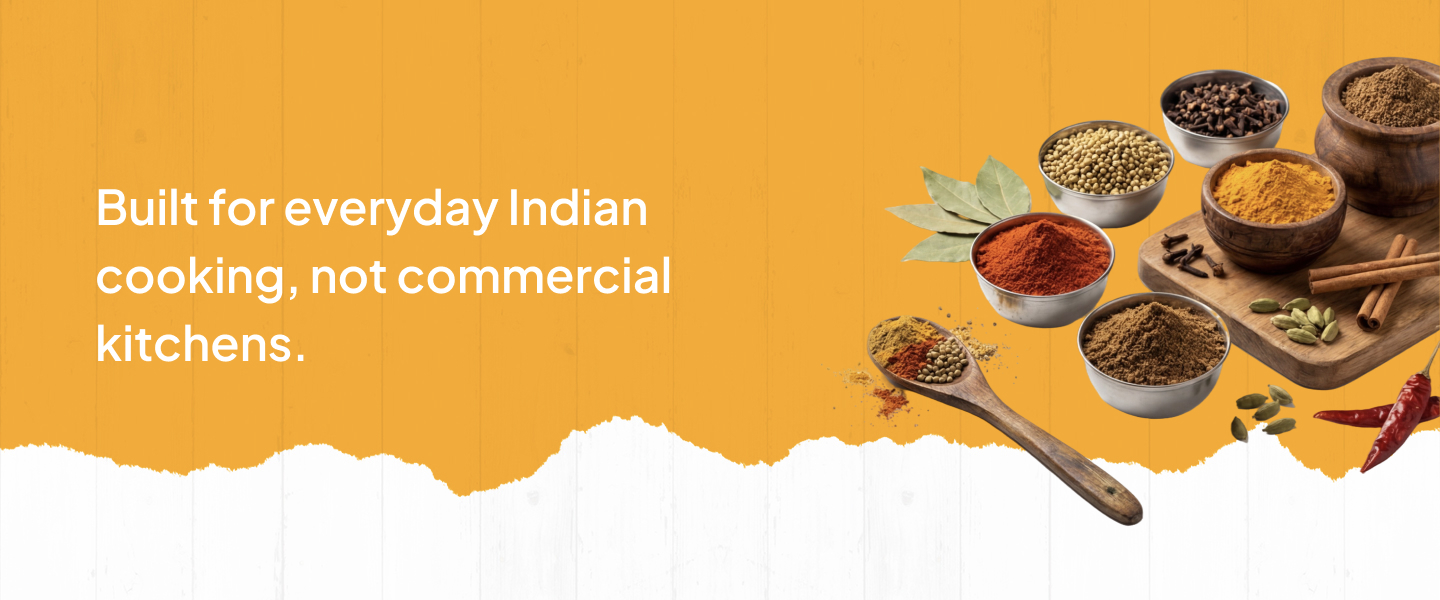
Why Tiger Foods Liquid Masalas Are Designed for Indian Home Kitchens (Not Restaurants)
Indian home kitchens and restaurant kitchens operate on completely different realities. One runs on scale, manpower, and systems. The other runs on time constraints, limited space, and daily repetition.
In 2026, this difference matters more than ever.
Tiger Foods liquid masalas are often mistaken as professional or restaurant ingredients.
In reality, they are intentionally designed for Indian home kitchens, for people who cook daily, not commercially.
This distinction explains why they work the way they do.
Are Tiger Foods liquid masalas meant for restaurants or home cooking?
Tiger Foods liquid masalas are engineered for domestic cooking realities, not restaurant operations.
Understanding why requires understanding how Indian homes actually cook.
Why Restaurant Kitchens and Home Kitchens Need Different Ingredients
Restaurant kitchens are built for volume. Home kitchens are built for repetition.
How Restaurants Cook
- Dedicated staff handling each step
- High heat, large vessels, constant monitoring
- Bulk seasoning and batch corrections
Restaurants can afford inconsistency during preparation because taste is corrected at scale.
How Indian Homes Cook
- One or two people managing the entire process
- Limited time, especially on weekdays
- Small quantities cooked frequently
Home kitchens cannot afford error. Ingredients must perform correctly the first time, every time.
Tiger Foods liquid masalas are designed with this reality in mind.
The Core Design Principle: Consistency Over Complexity
Home cooks don’t want to “experiment” every day. They want yesterday’s dal, biryani, or curry to taste the same today.
Why Traditional Masalas Struggle at Home
- Variations in heat control
- Inconsistent measuring
- Storage-related flavour loss
Even skilled home cooks experience inconsistency over time.
How Tiger Foods Solves This
Tiger Foods liquid masalas are standardised formulations. The flavour profile does not change based on handling, minor heat variation, or storage conditions.
This consistency is not accidental, it is the primary design goal.
Designed for Small Batches, Not Bulk Cooking
Restaurant ingredients are optimised for large volumes. Home cooking is not.
The Problem with Restaurant-Style Ingredients at Home
- Over-concentration for small quantities
- Difficult portion control
- Wastage and imbalance
Ingredients designed for bulk do not scale down cleanly.
Why Tiger Foods Works Better at Home
Tiger Foods liquid masalas are calibrated for:
- Family-size portions
- Single-pot cooking
- Repeat use across the week
This makes them practical for daily meals, not just occasional cooking.
Time-Poor Households Shape Ingredient Design in 2026
Indian households in 2026 are time-compressed. Dual incomes, longer commutes, and fragmented schedules define daily cooking.
What Home Cooks Need Today
- Fewer steps
- Faster flavour integration
- Minimal correction during cooking
How Liquid Masalas Fit This Shift
Liquid masalas integrate immediately. They don’t require prolonged roasting or precise sequencing.
This reduces:
- Active cooking time
- Cognitive load
- Risk of error
Tiger Foods is designed around weekday cooking, not showcase dishes.
Why Restaurants Don’t Need This Level of Simplification
This is where misunderstanding often happens.
Restaurants already have:
- Trained staff
- Standard operating procedures
- Ability to taste and adjust continuously
They don’t need ingredients that reduce steps, they have systems to manage complexity.
Home kitchens don’t.
Tiger Foods liquid masalas reduce complexity because home cooking demands it.
Flavour Control Matters More Than Flavour Intensity at Home
Restaurants often chase intensity. Home kitchens need balance.
The Home Cooking Reality
Food is eaten daily. Overpowering flavours cause fatigue.
Tiger Foods’ Approach
- Balanced spice profiles
- No sharp or burnt aftertaste
- Stable aroma even on reheating
This makes dishes suitable for everyday consumption, including children and elders.
Storage, Shelf Life, and Indian Kitchen Conditions
Indian kitchens face:
- Heat
- Humidity
- Limited storage space
Challenges with Dry Masalas
- Moisture absorption
- Clumping
- Aroma degradation
Why Liquid Masalas Perform Better
Tiger Foods liquid masalas are more stable in Indian climate conditions, retaining flavour integrity over time.
This reliability is critical for home kitchens that don’t restock ingredients frequently.
Designed for Repetition, Not Occasions
Restaurants cook variety daily. Homes repeat dishes weekly.
Why Repetition Changes Ingredient Needs
An ingredient that tastes good once but inconsistently over time fails at home.
Tiger Foods’ Advantage
Liquid masalas are designed to deliver the same outcome across repeated cooking cycles.
This builds confidence in the cook, not dependence on trial and error.
Not a Shortcut. A System Upgrade for Home Cooking
There’s a misconception that convenience ingredients are shortcuts.
In reality, they are system improvements.
Tiger Foods does not remove flavour depth. It removes unnecessary friction.
This distinction matters.
What This Design Philosophy Means for Indian Home Cooks
Tiger Foods liquid masalas are not trying to replace traditional cooking. They are adapting it to modern life.
They are best suited for:
- Daily meals
- Working households
- Small families
- Consistency-focused cooking
They are not designed to replicate restaurant workflows—and that is exactly why they work at home.
Indian home kitchens don’t need restaurant ingredients. They need ingredients that respect time, repetition, and reliability.
Tiger Foods liquid masalas are designed with this understanding at their core. Not for scale. Not for spectacle. But for everyday Indian cooking that needs to work, every single day.