


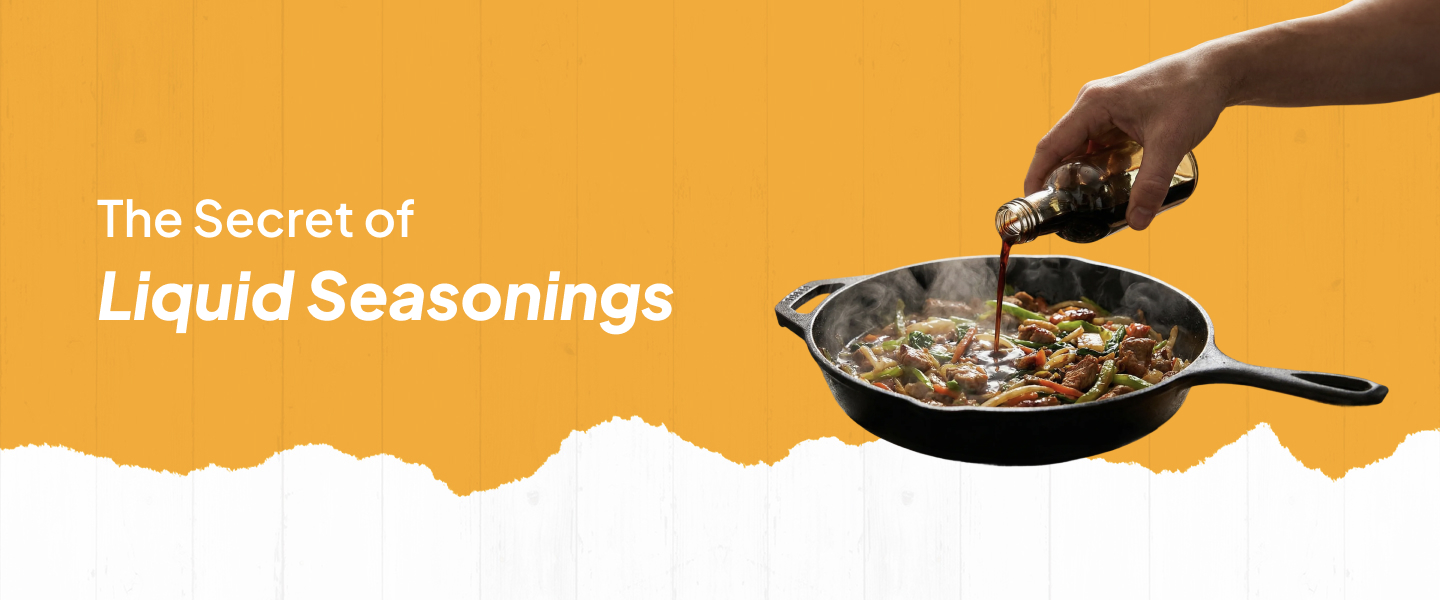
How to Achieve Restaurant-Quality Flavors at Home: The Secret of Liquid Seasonings
Home cooking has entered a new era. Today’s consumers want restaurant-style cooking at home, without long prep hours, complicated techniques, or inconsistent results.
This shift is driven by busy lifestyles, rising food awareness, and a growing preference for quality over shortcuts.
Tiger Foods sits at the center of this evolution, redefining how authentic flavors are created through precision-crafted liquid seasonings designed for speed, consistency, and depth of taste.
Why Restaurant-Style Cooking Feels Hard to Replicate at Home
Professional kitchens operate on systems, not guesswork. Chefs rely on calibrated ingredients, controlled processes, and repeatable flavor profiles. At home, the challenge is fragmentation, powders that don’t blend evenly, spices that burn, marinades that don’t penetrate, and flavors that change every time you cook.
The gap isn’t skill. It’s formulation.
Restaurant-quality flavor depends on balance, aroma release, and timing. Traditional dry masalas often fail to deliver all three consistently. This is where liquid seasonings change the game.
What Are Liquid Seasonings and Why They Matter
Liquid seasonings are concentrated blends of natural spices, extracts, and aromas formulated in liquid form. Unlike powders, they disperse evenly, activate instantly, and bind seamlessly with oils, proteins, and gravies.
From a culinary efficiency standpoint, liquid seasonings offer:
- Faster flavor absorption
- Uniform taste across every bite
- No raw spice aftertaste
- Greater control over intensity
For home cooks chasing restaurant-style cooking, this translates into precision without complexity.
The Science Behind Liquid Masala Performance
Liquid seasonings work because flavor compounds dissolve more effectively in liquid carriers. Aroma molecules release at lower heat, reducing the risk of bitterness or overcooking. This allows even novice cooks to replicate chef-level outcomes.
Tiger Foods has spent decades refining this science, combining chemical engineering principles with traditional spice knowledge to produce liquid masalas that preserve authenticity while improving execution.
The result is predictable excellence. Every time.
The 2025 Cooking Trend: Convenience Without Compromise
Modern home kitchens are driven by speed, but not at the cost of quality. Consumers are actively rejecting artificial shortcuts and moving toward natural, efficient solutions.
Liquid seasonings sit perfectly at this intersection:
- Shorter cooking time
- Fewer ingredients
- Cleaner kitchens
- Consistent output
This aligns with the 2025 demand for quick cooking tips that don’t dilute flavor integrity. Instead of measuring, roasting, grinding, and adjusting, home cooks can focus on technique and presentation, exactly how restaurants operate.
How Tiger Foods Enables Restaurant-Style Results
Tiger Foods’ liquid masala range is engineered for versatility and control. Whether it’s biryani, gravies, curries, rice dishes, or marinades, the formulation integrates directly into the cooking process without altering texture or aroma balance.
What sets Tiger Foods apart is its end-to-end approach:
- Global raw material sourcing
- In-house R&D and testing labs
- Natural extraction methods
- Chef-tested formulations
This is not a retail shortcut product. It’s a professional-grade ingredient adapted for home kitchens.
Where Liquid Seasonings Outperform Traditional Masalas
Traditional masalas rely heavily on heat activation. This increases the margin for error—burnt spices, uneven flavor release, or overpowering notes. Liquid seasonings eliminate these risks by activating uniformly at lower temperatures.
Key advantages include:
- Faster marination for meats and vegetables
- Better penetration in rice-based dishes
- Stable flavor during reheating
- No residue or gritty mouthfeel
For anyone serious about restaurant-style cooking, this consistency is non-negotiable.
Practical Use Cases for Home Cooks
Liquid seasonings are not limited to complex dishes. Their real strength lies in everyday cooking.
A few examples:
- Add liquid biryani seasoning directly to rice water for uniform flavor
- Mix liquid spice with oil for instant marinades
- Enhance gravies without extending cooking time
- Finish dishes with aroma without additional fat
These quick cooking tips allow home cooks to operate like professional kitchens—efficient, controlled, and repeatable.
From Home Kitchens to Global Tables
Tiger Foods’ journey from Old Madras to global markets is rooted in one principle: flavor must scale without dilution. The same formulations trusted by chefs and food professionals are now accessible to households worldwide.
This bridges a critical gap. Home cooks no longer need to imitate restaurant methods—they can adopt the same ingredient logic.
Liquid seasonings make professional consistency achievable without professional infrastructure.
Why Liquid Seasonings Are the Future of Home Cooking
As cooking continues to evolve, ingredients that reduce friction while increasing quality will dominate kitchens. Liquid seasonings are not a trend—they are an upgrade.
They align with:
- Health-conscious cooking
- Time-efficient meal preparation
- Flavor standardization
- Natural ingredient expectations
For families, food entrepreneurs, and serious home cooks, liquid masalas represent control, confidence, and culinary clarity.
Why Liquid Seasonings Are the Future of Restaurant-Style Home Cooking
Restaurant-style cooking isn’t about complexity. It’s about systems, balance, and reliable ingredients. Liquid seasonings deliver all three.
Tiger Foods has transformed decades of flavor expertise into a format that fits modern kitchens, without sacrificing authenticity, aroma, or depth.
For anyone seeking faster cooking, consistent results, and professional-grade flavor at home, liquid seasonings are no longer optional. They are essential.
And that’s the real secret behind restaurant-quality flavors, now simplified, standardized, and ready for everyday cooking.